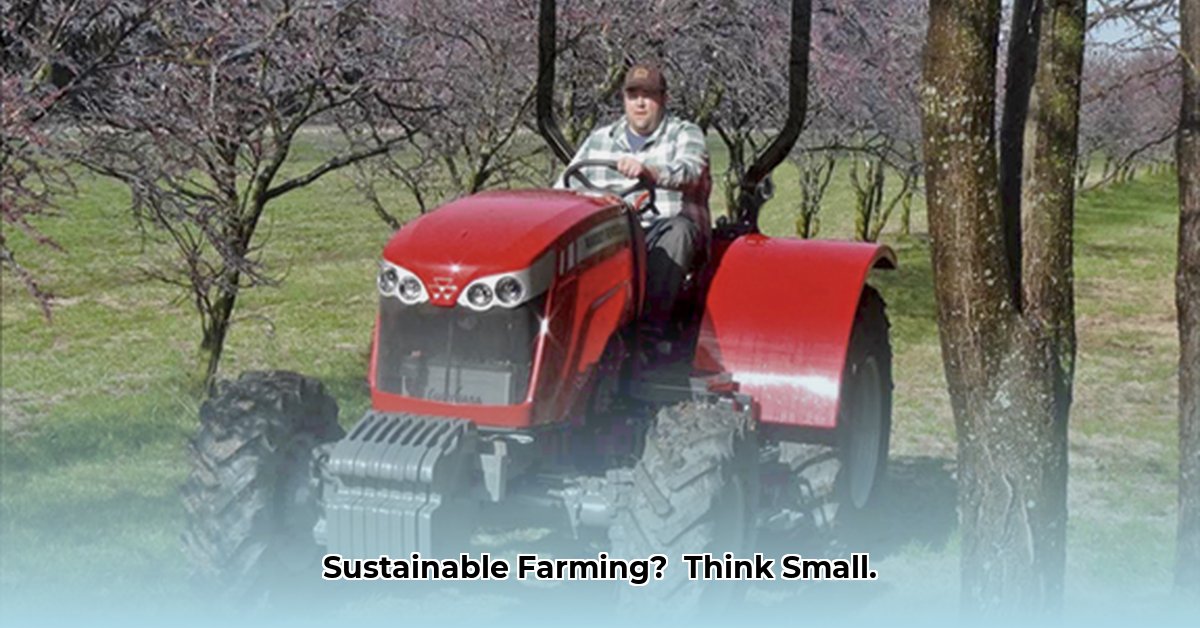
Low-profile tractors are revolutionizing sustainable agriculture, offering enhanced maneuverability and efficiency in diverse farming environments. Their compact design allows access to previously unreachable areas, improving resource utilization and optimizing operational practices. This detailed guide explores the benefits, challenges, and practical applications of low-profile tractors for various stakeholders. For more information on tractor costs, see this helpful resource: Tractor Costs.
Enhancing Sustainability and Efficiency
Low-profile tractors contribute significantly to sustainable farming practices through several key advantages:
Fuel Efficiency and Reduced Operational Costs
One major benefit is improved fuel efficiency. Manufacturers like Kubota and John Deere incorporate fuel-efficient engines and features such as economy PTO (power take-off) to minimize fuel consumption. While precise savings vary depending on factors like farm size and usage patterns, anecdotal evidence from farmers suggests substantial cost reductions. This directly translates to increased profitability and a smaller environmental footprint. "We've seen fuel savings of up to 20% compared to our standard tractors," notes Sarah Miller, Farm Manager at Miller Family Farms.
Furthermore, many low-profile tractors incorporate advanced technologies like John Deere's JDLink™ system. This remote monitoring system allows for proactive maintenance scheduling, reducing downtime and maximizing operational efficiency. "JDLink™ has revolutionized our maintenance strategy," says David Lee, Precision Agriculture Specialist at AgriTech Solutions. "Predictive maintenance significantly reduces unexpected repairs and keeps our tractors running smoothly."
Precision Agriculture and Optimized Resource Management
The enhanced maneuverability of low-profile tractors makes them ideal for precision agriculture techniques. Their ability to navigate tight spaces facilitates variable-rate applications (VRA) of fertilizers, pesticides, and seeds, optimizing resource use and minimizing waste. This targeted approach reduces input costs while simultaneously minimizing environmental impact. "VRA using our low-profile tractor has reduced our fertilizer use by 15%, resulting in significant cost savings and environmental benefits," reports Mark Johnson, Owner of Johnson Orchards.
However, the initial investment in these technologies can be substantial. The cost of the tractor itself, plus precision technology add-ons (GPS, auto-steer, VRA systems), represents a significant upfront expense. Is the investment justified? The answer, as with most agricultural investments, lies in careful ROI calculations (see section below).
Understanding the Challenges and Considerations
While low-profile tractors offer numerous benefits, several challenges warrant consideration:
High Initial Costs and Training Requirements
The upfront cost of purchasing a low-profile tractor, especially a model equipped with advanced technology, can be a significant barrier for entry, particularly for smaller farms. Moreover, these tractors often require specialized training for effective operation and maintenance. Farmers must factor in the cost of training and ongoing support for maximizing the return on their investment.
Technological Dependence and Maintenance Considerations
The technological sophistication of modern low-profile tractors means they are inherently dependent on functioning technology. Malfunctions or signal interference can disrupt operations, highlighting the importance of regular maintenance, service contracts, and potential backup systems. "It's crucial to have a robust maintenance plan in place," emphasizes Richard Thompson, Agricultural Engineer at the University of Illinois. "Regular servicing will minimize downtime and protect your investment."
Who Benefits Most from Low-Profile Tractors?
The advantages of low-profile tractors extend to a wide range of stakeholders:
| Stakeholder | Advantages | Drawbacks |
|---|---|---|
| Poultry Farmers | Improved maneuverability for cleaning and manure management in confined spaces. | Higher initial investment; requires specialized skills. |
| Orchard/Vineyard Owners | Increased efficiency in narrow rows, minimizing crop damage. | Higher purchase price compared to standard compact tractors. |
| General Farmers | Improved efficiency in limited-access areas; reduced fuel consumption. | Need for operator training and technological proficiency. |
| Equipment Manufacturers | Growing market demand; opportunities for innovation. | Maintaining cost-effectiveness while integrating advanced features. |
| Government Agencies | Promotion of sustainable farming; increased agricultural productivity. | Balancing incentives with budget constraints; ensuring equitable access. |
Calculating the Long-Term ROI of Low-Profile Tractors
The return on investment (ROI) for low-profile tractors depends on several factors. A comprehensive approach to ROI calculation requires the following steps:
- Initial Investment: Include tractor price, technology costs, and training expenses.
- Annual Operating Costs: Account for fuel, maintenance, repairs, labor, and input costs.
- Yield Increase Quantification: Estimate yield improvements based on historical data or trials.
- Revenue Increase Calculation: Multiply yield increase by the market price of your crop.
- Net Annual Benefit: Subtract annual operating costs from the revenue increase.
- Payback Period: Divide the initial investment by the net annual benefit.
- Long-Term ROI Assessment: Consider tractor lifespan, technological advancements, and data-driven optimization strategies.
A thorough risk assessment should accompany every ROI calculation. Potential risks include equipment malfunctions, GPS signal interference, data security breaches, technological obsolescence, and fluctuating crop prices. Mitigation strategies should be implemented to minimize potential negative impacts.
Consider the perspectives of different stakeholders when assessing long-term profitability. Farmers focus on direct cost savings and yield increases, while suppliers are concerned with market growth. Policymakers focus on broader environmental and economic benefits.
Conclusion: Embracing a Sustainable Future
Low-profile tractors are a key component of a more sustainable and efficient agricultural future. By thoroughly considering both the advantages and challenges, and diligently pursuing data-driven optimization, farmers can harness the significant potential of these machines to build resilient, profitable, and environmentally responsible operations. Data analysis and ongoing improvements are critical for maximizing the long-term sustainability and economic benefits of low-profile tractors in agriculture.